

-
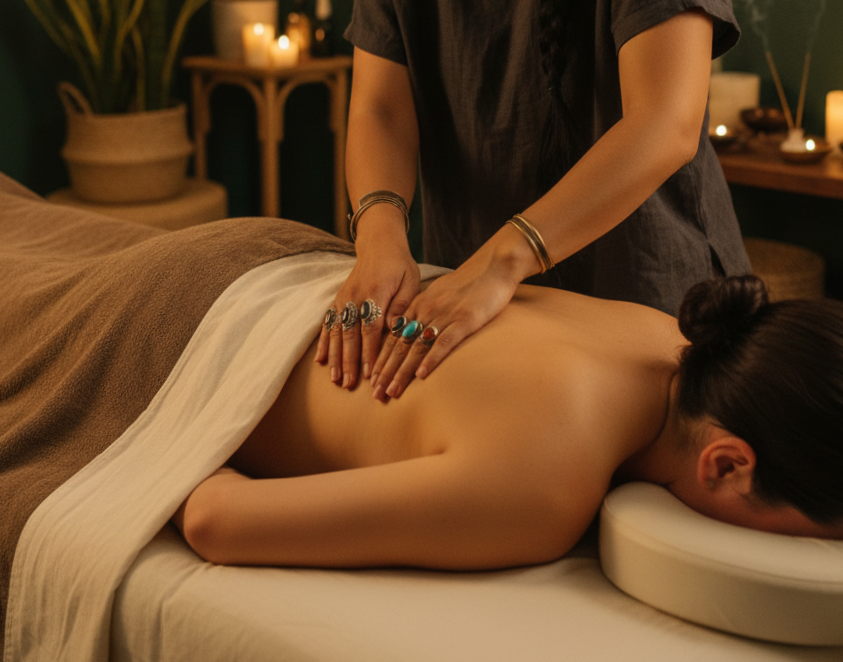
Fascial Release
Myofascial Release is a slow intentional release of the patterns your body has learned to identify with, the condition of our fascia is often reflected in our lifestyle and habits, fascia is influenced through the way we breathe, brace our bodies, and interface with the world. Where many modalities chase muscular tension, this work goes into the connective web of fascia that surrounds and interweaves every muscle, organ, and structure in your body. This system doesn’t just hold structuralshape—it stores stress, trauma, posture, and memory. This service is designed to restore fluidity, release restriction physically and emotionally, and return your body to a more natural, receptive state.
-

Yoni Steaming
Yoni Steaming is a gentle yet powerful ritual that uses herbal-infused steam to bring warmth, circulation, and attention back to the womb space. Yoni steaming is a way of softening, opening, and restoring relationship with a part of the body that often carries tension, silence, and neglect. Rooted in traditional practices across cultures, yoni steaming is designed to support cleansing, balance, and energetic renewal from the inside out.
What this work supports:
Menstrual balance and cycle regulation
Pelvic tension and stagnation
Postpartum healing (when appropriate and cleared)
Vaginal and uterine wellness
Nervous system relaxation and grounding
-
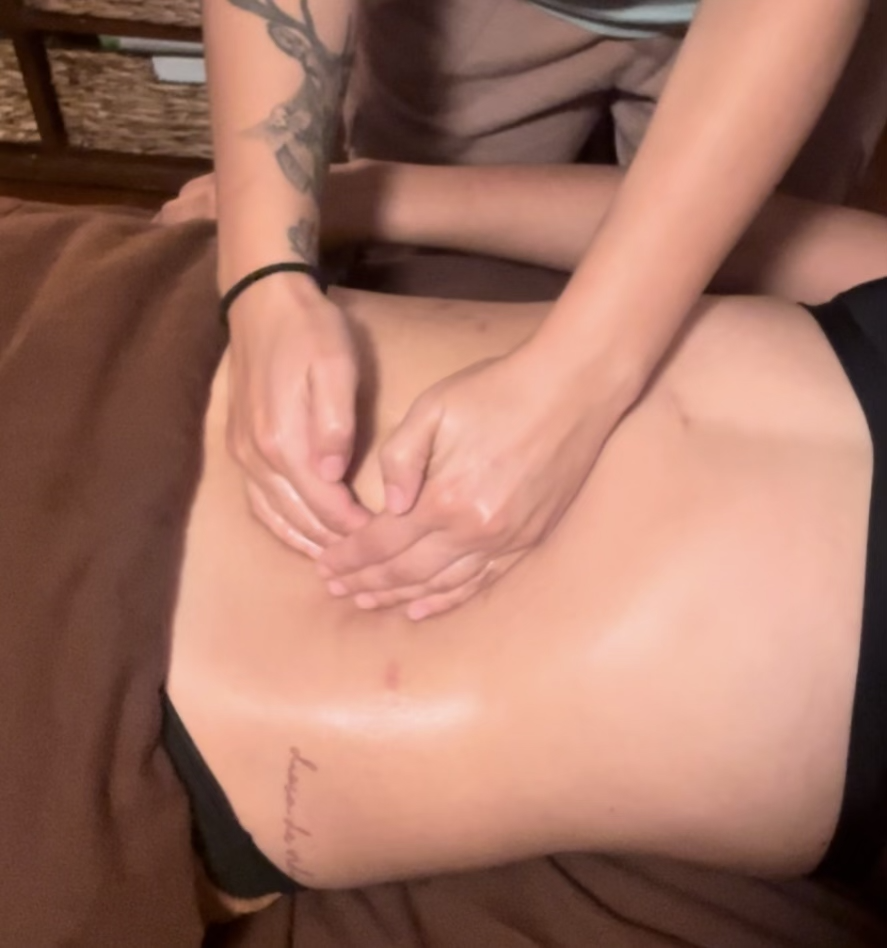
Sobada
Sobadas are traditional bodywork rooted in Mexican healing practicesSobadas are designed to reposition what’s out of place, restore blood flow and bring the body back into alignment—physically, energetically, and emotionally.
Using a combination of firm, deliberate strokes and slow, precise manipulation, the practitioner works into the tissue to release tension, and realign organs.
Abdominal work is often central. In traditional sobadas, the abdomen is seen as the body’s furnace—impacting digestion, organ placement, circulation, and emotional processing. Through direct and grounded touch, the belly is gently but deeply engaged—helping to:
Support organ alignment and internal flow
Improve digestive function
Release stored tension and emotional holding
-
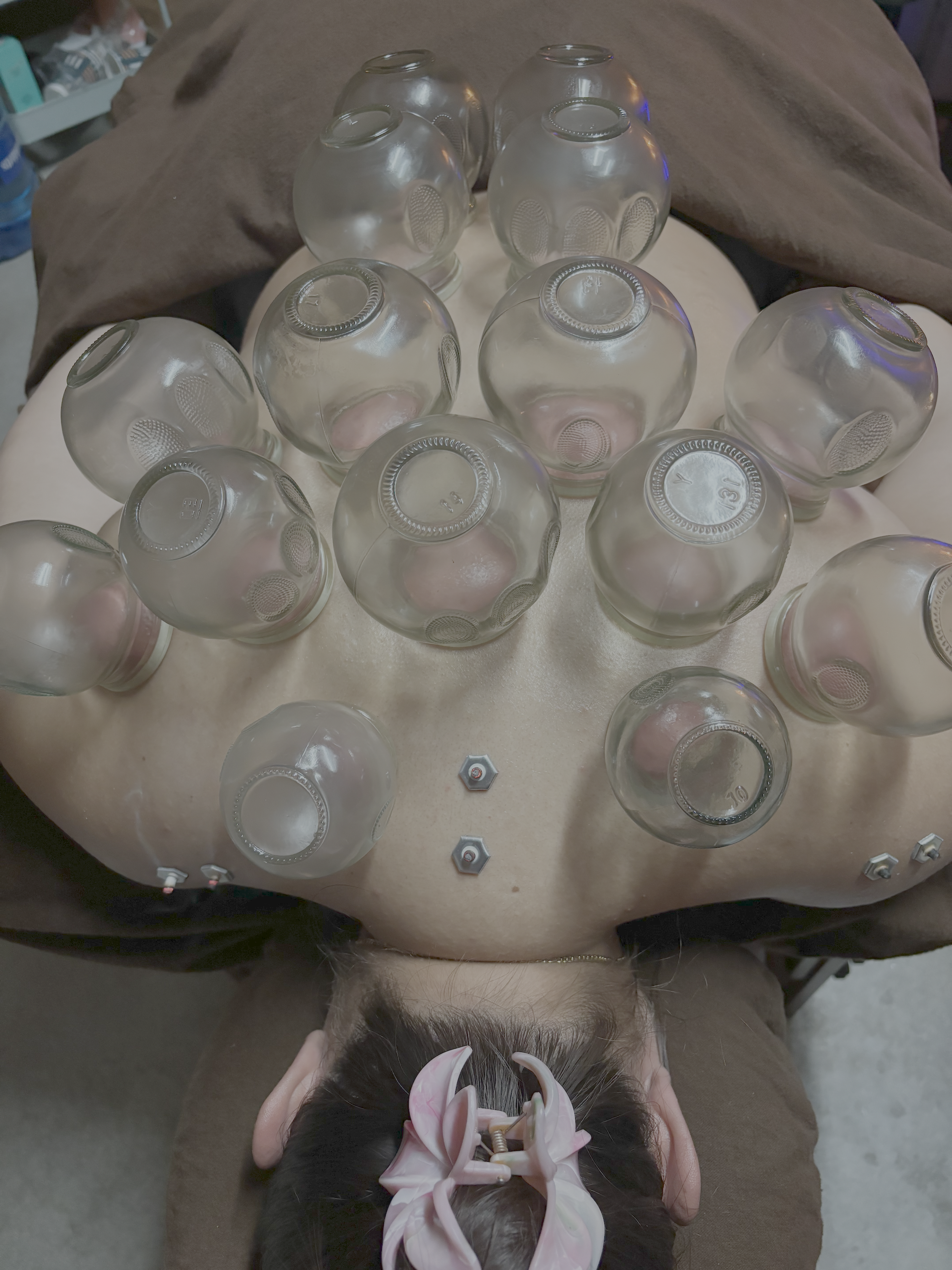
Fire Cupping
Fire cupping is a traditional bodywork technique that uses heat and suction to help release deep tension in the muscles and encourage healthy circulation. This suction helps increase blood flow to tight or stagnant areas, relax the fascia, and support the body’s natural healing processes. It can feel like a firm, steady pressure—intense for a moment, then deeply relieving as the tissues begin to soften.
-
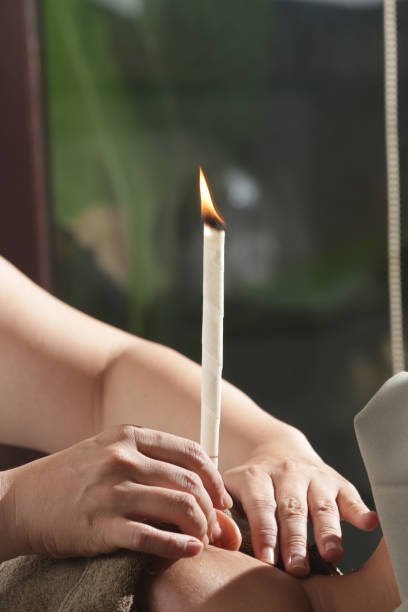
Ear Candling
Is a wellness practice in which a hollow, cone-shaped candle is placed gently in the outer ear canal and lit at the opposite end. As the candle burns, it creates a mild warming effect and a “vacuum” that assists with unclogging the ear canal, releases pressure in the head and promote a sense of relaxation.
-
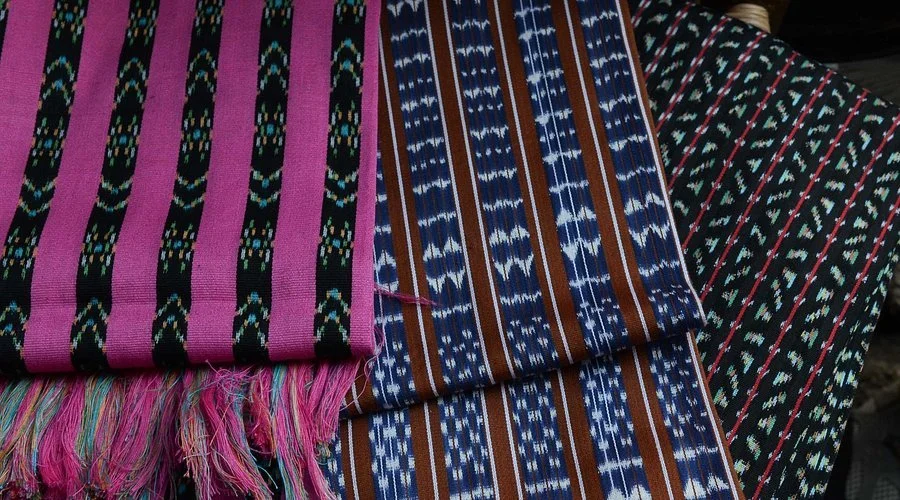
Cerrar De Cadera
A postpartum sealing ceremony also known as a closing the bones is performed at the end of the 40 day postpartum phase. It is offered to support the birthing mother in returning to herself post-birth and to seal the energetic points of the body that have been opened during pregnancy and childbirth.
At the center of this offering is the pelvis—the gateway of creation, identity, and stability. The closing of the hips (caderas) symbolizes the sealing of an energetic portal, helping to:
Reintegrate after major life transitions (not just postpartum, but breakups, grief, identity shifts)
Restore boundaries and personal sovereignty
Support hormonal and reproductive balance
Who this is for:
Postpartum mothers (at any stage—not just immediately after birth)
Women moving through a major life transition
Those feeling energetically scattered, depleted, or “open”
Individuals seeking deeper connection to their womb, body, or sense of self